
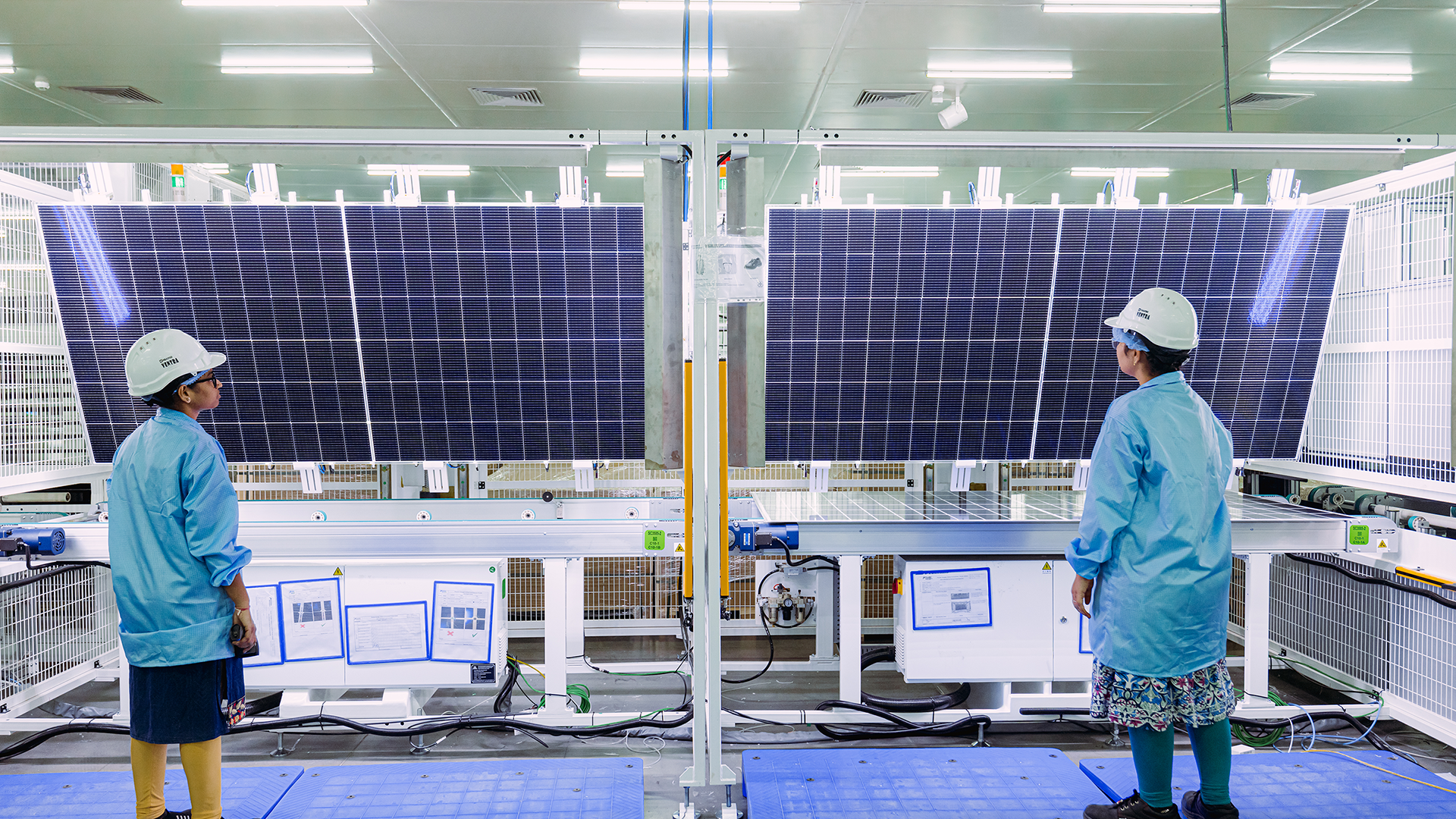
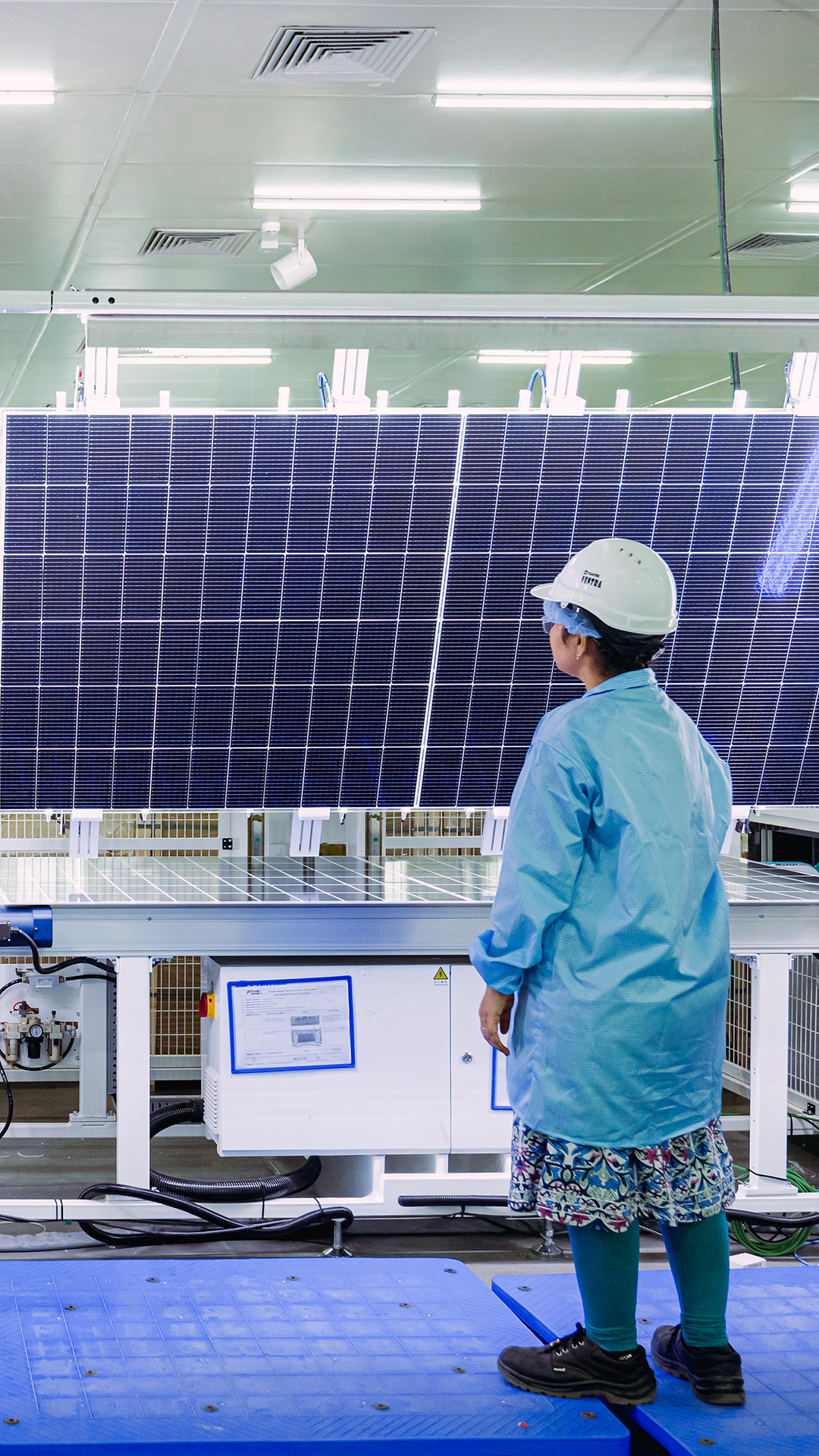


Unlike conventional modules that generate electricity only from the front surface, bifacial modules are engineered to capture reflected sunlight from both the front and rear sides. This additional energy generation helps improve overall system performance while reducing the levelized cost of energy (LCOE).

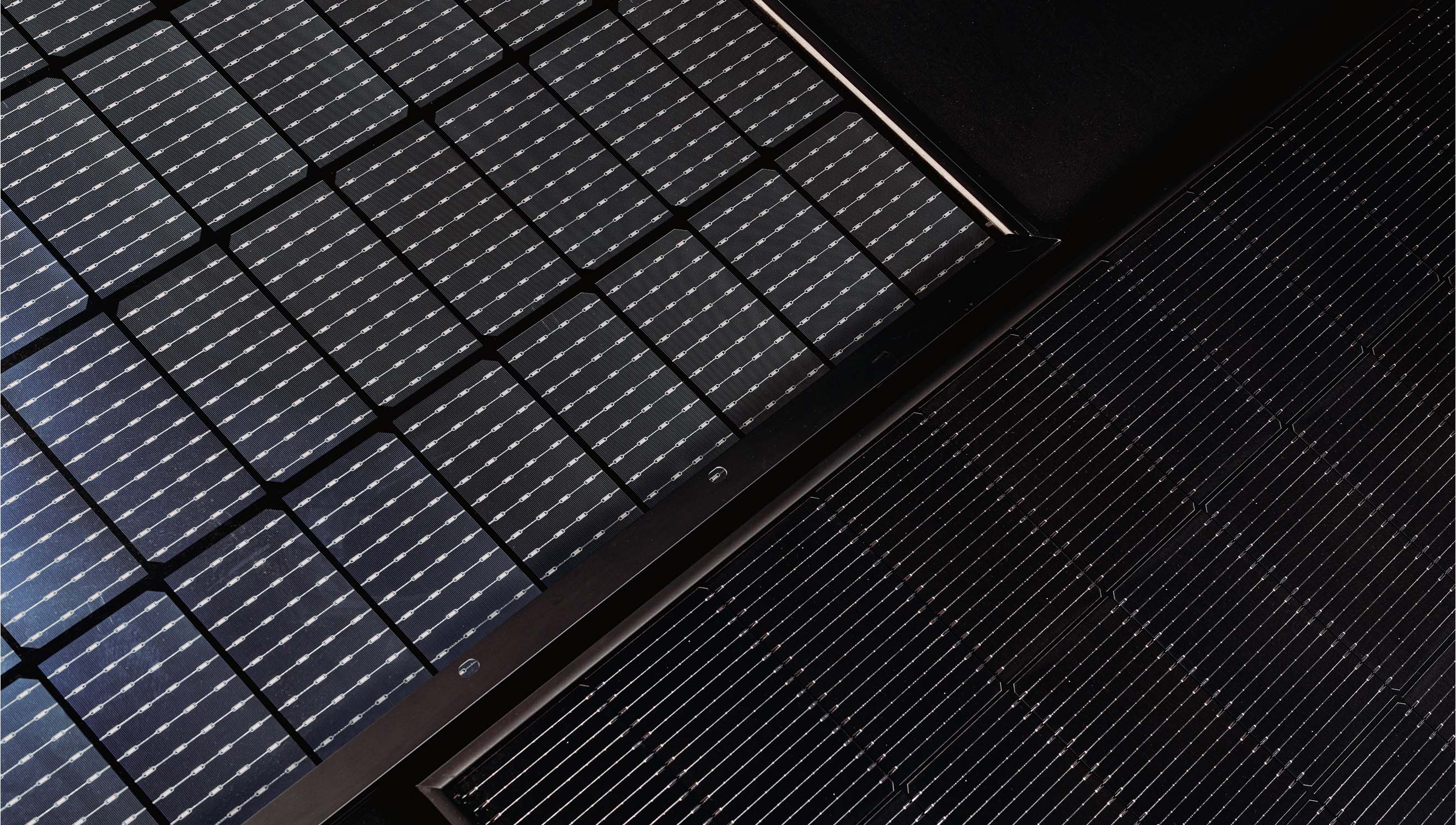
Bifacial Dual Glass
- 20%
- proven performance
- Front + rear generation
- Additional 5–25% energy yield*
- Glass-Glass
- Higher structural durability
- Utility, C&I & premium rooftop
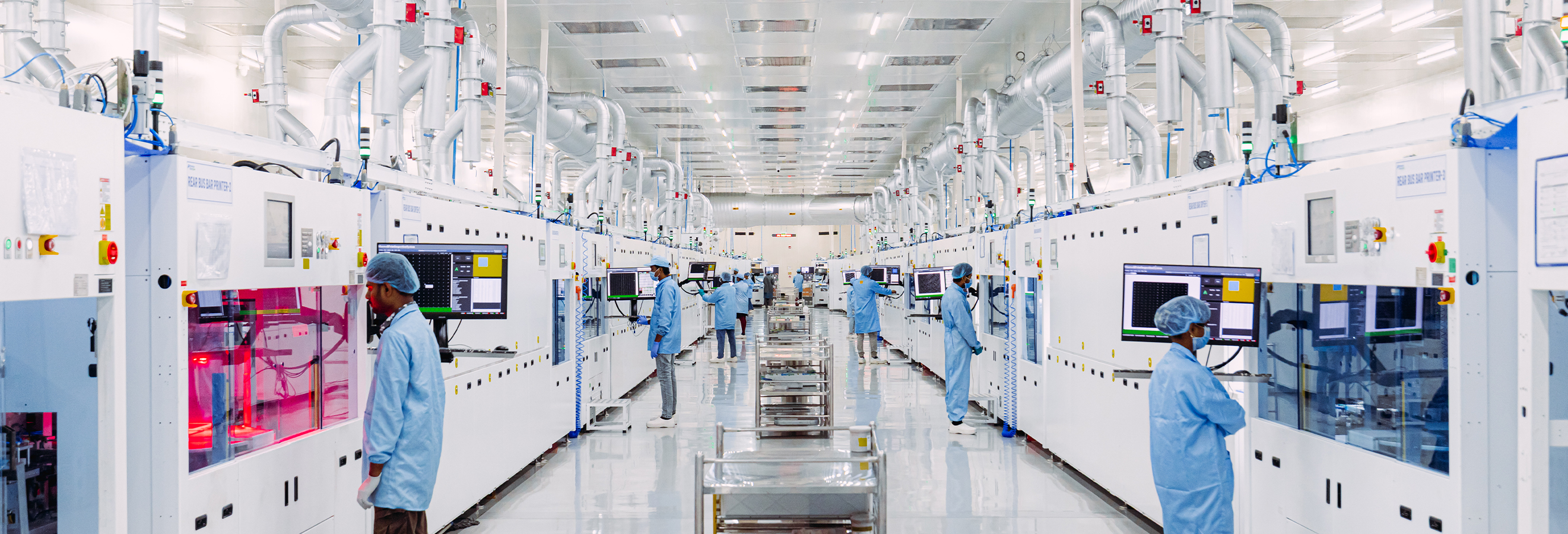
These advanced solar modules are engineered to maximize output from both sides.
- 5-25%
Heading
Additional Energy Generation*
(with bifacial solar modules) - Glass-Glass
Heading
Module Construction
(dual glass solar modules) - Excellent
Heading
Low Light Performance
(low light solar performance) - Lower
Heading
Long-Term Degradation
(low degradation solar modules) - Higher
Heading
Lifetime Energy Yield
- Lower
Heading
Levelized Cost of Energy (LCOE)
(lower LCOE solar panels)
layers
- Anti-Reflective Glass
- Encapsulant (EVA/POE)
- Solar Cells
- Rear Glass
- Aluminium Frame
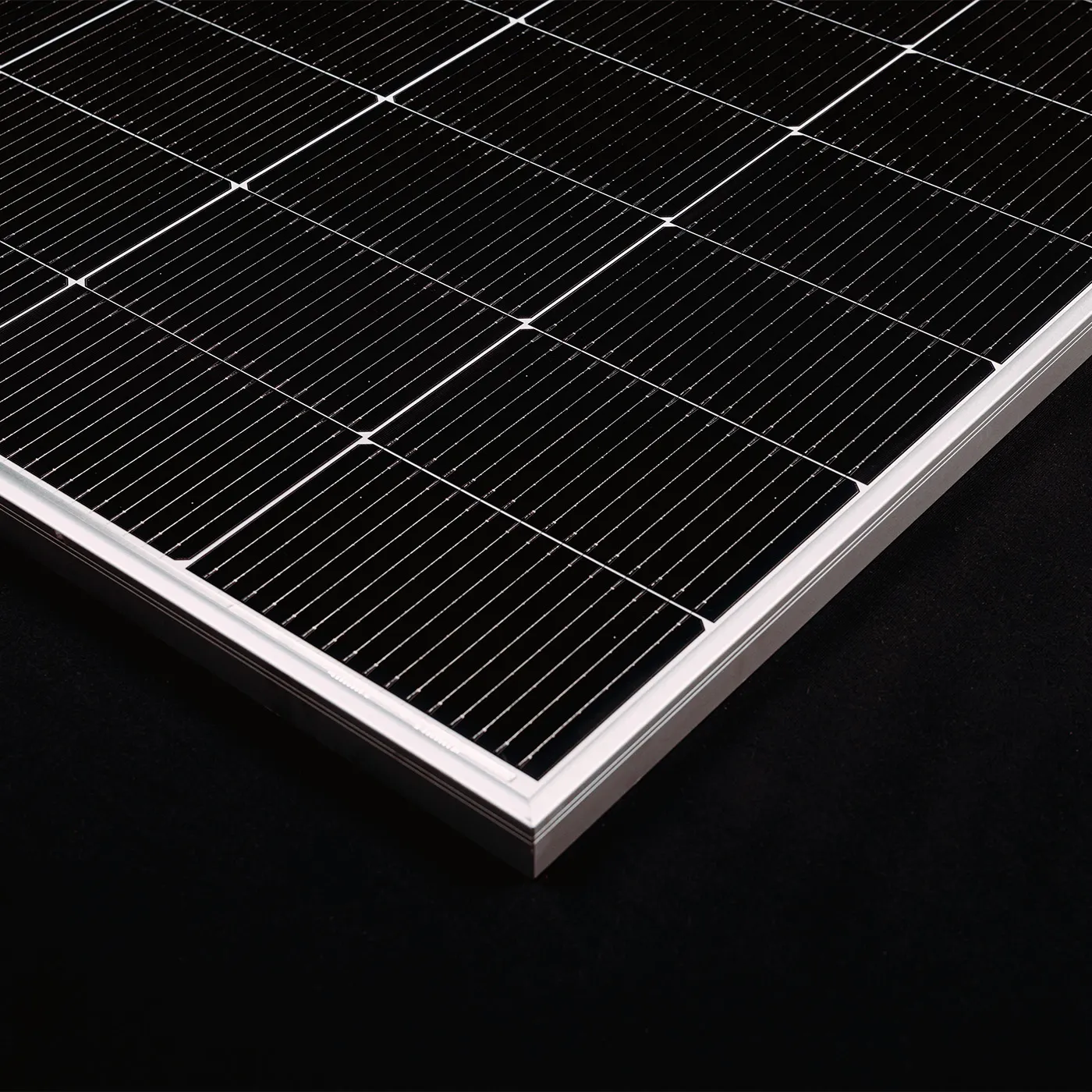
1

Dual-Glass Construction
Dual-Glass Construction
Improved structural strength and weather protection. Common in bifacial dual glass solar panels.

1

PID Resistance
PID Resistance
Supports stable long-term performance (PID resistant solar panels).
1

Moisture Protection
Moisture Protection
Enhanced resistance against environmental exposure.
1

Mechanical Strength
Mechanical Strength
Designed for demanding wind and snow loads.
1

Lower Degradation
Lower Degradation
Better long-term power retention (low degradation solar modules).
1

High Bifaciality
High Bifaciality
Captures additional reflected light for increased energy generation and supports utility scale bifacial solar.
1
Dual-Glass Construction
Dual-Glass Construction
Improved structural strength and weather protection. Common in bifacial dual glass solar panels.
1
PID Resistance
PID Resistance
Supports stable long-term performance (PID resistant solar panels).
1
Moisture Protection
Moisture Protection
Enhanced resistance against environmental exposure.
1
Mechanical Strength
Mechanical Strength
Designed for demanding wind and snow loads.
1
Lower Degradation
Lower Degradation
Better long-term power retention (low degradation solar modules).
1
High Bifaciality
High Bifaciality
Captures additional reflected light for increased energy generation and supports utility scale bifacial solar.
Built for Every Project
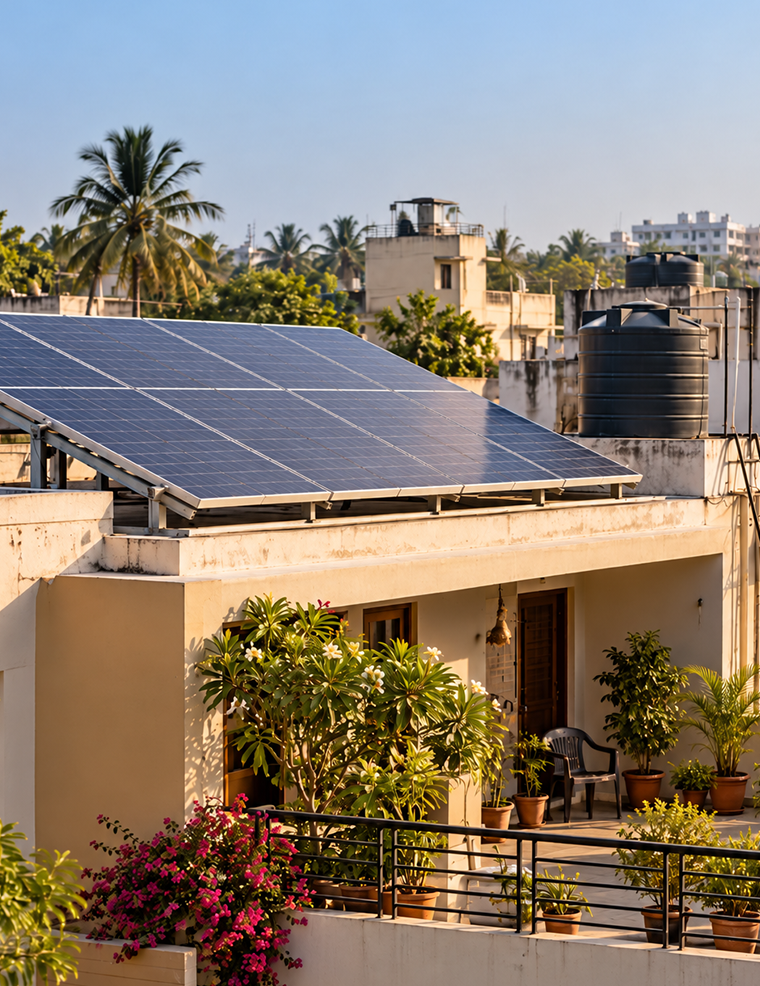
Residential
Residential
High-efficiency solutions for premium residential rooftop solar, delivering reliable performance through advanced residential solar panels.
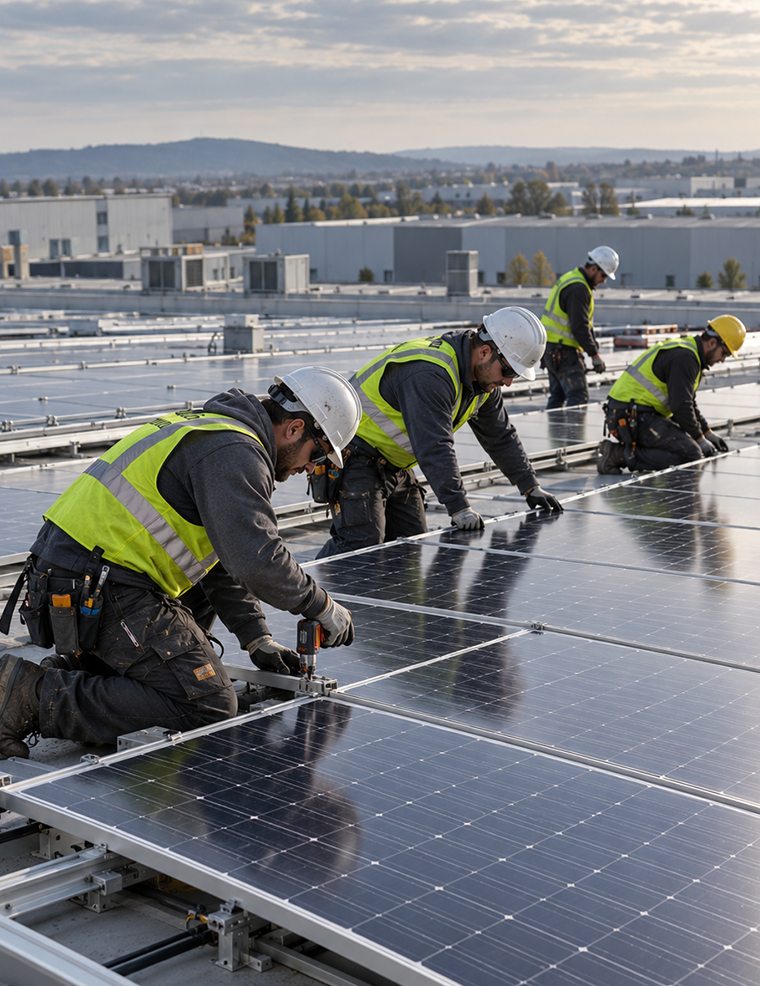
Commercial & Industrial
Commercial & Industrial
Engineered for commercial and industrial (C&I) applications with high-performance commercial solar modules for dependable energy generation.
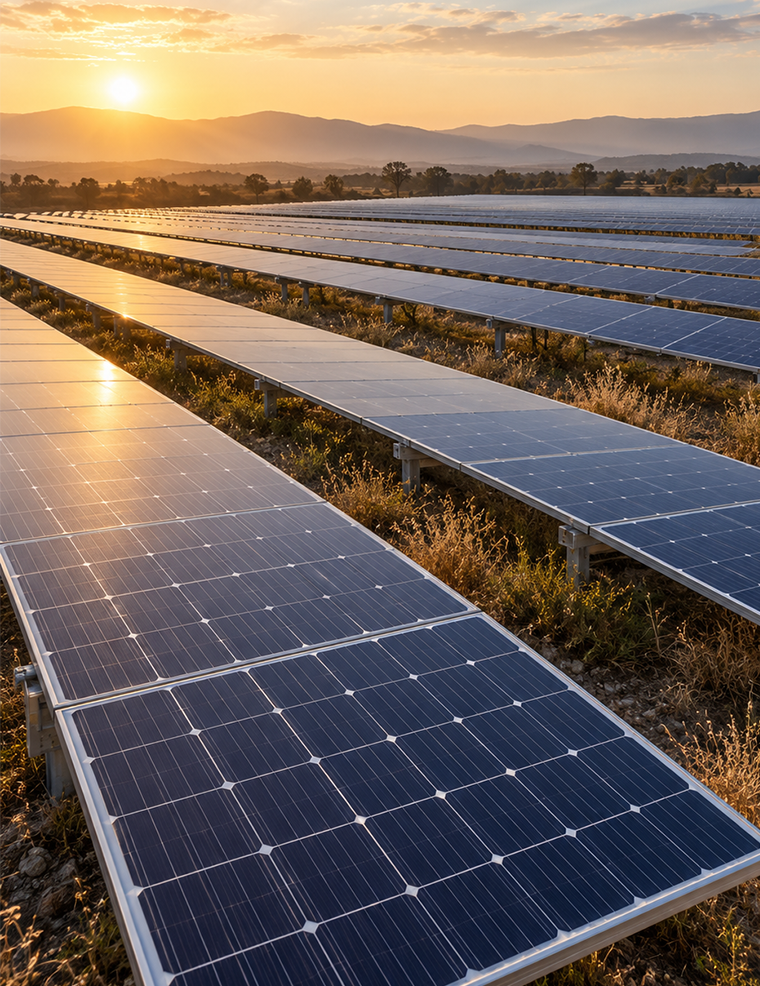
Utility Scale
Utility Scale
Designed for utility scale bifacial solar projects, combining high efficiency solar modules with reliable performance at scale
Learn more about Premier Energies solar modules and high efficiency solar modules.
Frequently asked questions


A bifacial dual glass module is a solar panel engineered to generate power from both its front and rear surfaces. Unlike conventional monofacial, glass backsheet modules, it uses glass on both sides to capture direct sunlight on the front and reflected light on the rear. This design, combined with an engineered layer stack (anti-reflective front glass, solar cells, encapsulant, rear glass and an aluminum frame), boosts energy output and supports long-term durability.
By harvesting reflected light from the rear side in addition to the front, bifacial modules deliver 5–25% additional energy yield*. The extra generation increases lifetime energy production, which helps lower the levelized cost of energy (LCOE). The technology also supports strong low light performance, further improving overall system output over time.
Bifacial modules provide higher lifetime energy generation and improved project economics. Compared to conventional monofacial designs, they offer front and rear generation, glass-glass construction for higher structural durability, lower long-term degradation, and strong low light performance. These are the benefits that make them attractive across modern solar projects.
Key reliability features include dual glass construction for structural strength and weather protection, PID resistance for stable long-term performance, enhanced moisture protection, mechanical strength for demanding wind and snow loads, and lower degradation. High bifaciality further increases rear-side energy capture over the system life.
They’re built for a wide range of projects: premium residential rooftops prioritizing long-term energy generation, commercial and industrial (C&I) systems seeking reliable performance and improved returns, and utility-scale ground-mounted installations where bifacial technology maximizes lifetime energy yield.